
Moving objects
Basically, there are two groups of objects that can be relocated
- Historical objects.
- Engineering facilities and other heavy loads.
Relocating historical buildings
Historical buildings are basically the most complex objects to relocate when it comes to construction. It is essential to choose technology that will interfere with the historical structure of the building as little as possible
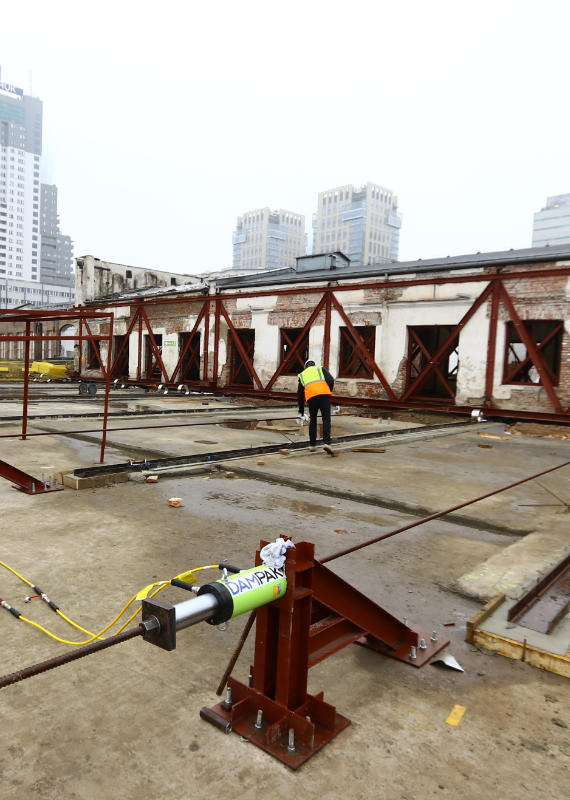

Each time, before starting to develop the technology, a detailed evaluation of the object needs to be made, including:
- determining the output static diagram
- determining the existing static diagram as it might have changed over time
- inventorying scratches and cracks and determining their origins
- determining the strength and the corrosion of the in situ materials and, if possible, taking samples and doing laboratory tests
- analyzing the soil and excavating for the foundations
After gathering detailed information on the condition of the structure, we can develop a numerical model and, as a result, design the reinforcing structure. While relocating, it is very important that the building is not subject to unfavorable stresses related to its geometrical changes. For this purpose, our numerical models are influenced by a number of external forces and each time analyzed by a team of engineers. You cannot allow the condition of the building to deteriorate, as a result of work.
While shifting the object, it is extremely important that the movement is smooth and follows a predetermined trajectory. A sharp jerk could result in new scratches. Our sliding systems, before being put into use, have been thoroughly tested on 1:1 models under maximum load.
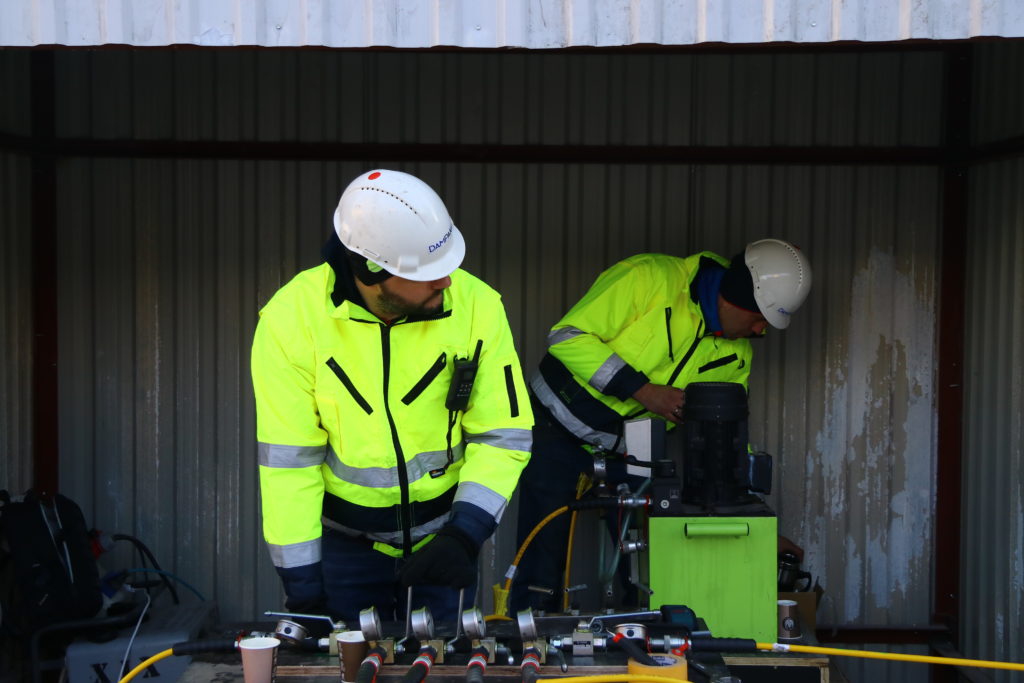
So that the movement of the building follows a previously planned trajectory, the actuators must be synchronized with the surveying tools. We are able to scale our devices as precisely as possible so that the deviation on a several-meter way does not exceed 1mm!!
Engineering facilities and other heavy loads
Engineering objects and other heavy loads are pretty easy to move, as they do not require a professional evaluation of their technical condition. Moreover, it is possible to make structural changes before the facility is constructed.
Nowadays, relocating objects is commonly used for building roadways that cross railroads. The time of closing a railway line is extremely important for freight and passenger transport, therefore this complex operation is economically applicable.
You can see a sample task that we are currently performing below

Due to the limited free space around the railway line, a sliding technology has been used for the viaduct consisting of two halves

In this task it is extremely important to use slides that will not be damaged while building the frame on the guide beams and will meet their design objectives after a few months.